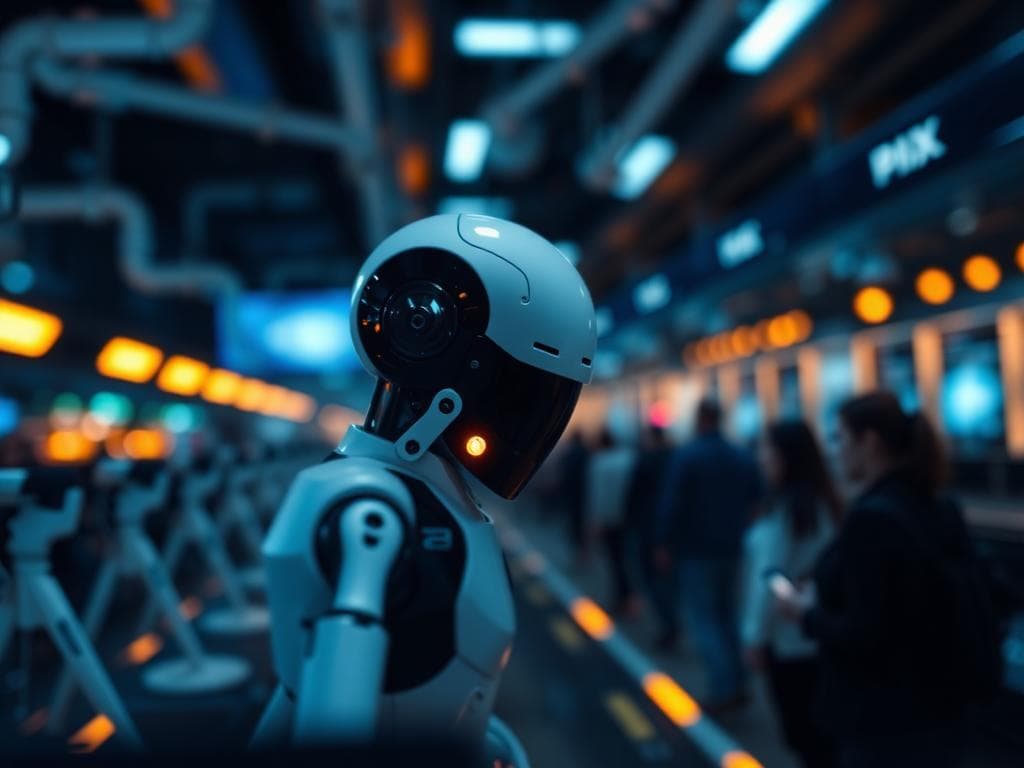
Hyundai Completes Full Acquisition of Boston Dynamics from SoftBank for $325 Million
Hyundai Secures Full Control as Humanoid Robotics Race Heats Up
Hyundai Motor Group is moving to complete its full acquisition of Boston Dynamics, the iconic robotics company famed for its advanced quadruped and humanoid robots. According to reports from Maeil Business Newspaper and Reuters, Hyundai plans to purchase SoftBank's remaining 9.65% stake for $325 million. A board meeting for final approval is expected on June 22, 2026.
This transaction finalizes a journey that began in 2021 when Hyundai paid approximately $880 million for an 80% controlling stake, valuing Boston Dynamics at roughly $1.1 billion at that time. The current deal executes a put option SoftBank retained during that initial sale. Once complete, Boston Dynamics will become a wholly-owned Hyundai subsidiary.
The timing is significant. This financial maneuver unfolds as Boston Dynamics' Atlas humanoid robot is transitioning from research spectacle to commercial deployment. Hyundai's move signals a decisive shift from being a strategic investor to the sole owner of a critical, in-house advanced robotics capability.
From YouTube Sensation to Factory Floor
Boston Dynamics' path has been unconventional. Originally spun out from MIT, it was acquired by Google in 2013, sold to SoftBank in 2017, and then majority-acquired by Hyundai in 2021. For years, its robots were more famous for viral parkour videos than tangible commercial applications.
That perception is changing. The four-legged Spot robot marked the company's first major commercial success. Now, the focus is squarely on Atlas. At CES in January 2026, Hyundai and Boston Dynamics publicly demonstrated a new, fully electric Atlas prototype capable of walking and being remotely piloted.
The critical detail was not the demo itself, but the deployment plan. A production version of Atlas is slated to begin work at Hyundai's Metaplant America electric vehicle factory near Savannah, Georgia, by 2028. Initial tasks will involve parts sequencing, with ambitions to handle heavier, more complex operations by 2030.
The High-Stakes Humanoid Race
Hyundai's full ownership grants it a unique advantage in the intensifying global competition to deploy humanoid robots. Unlike pure-play robotics startups, Hyundai owns the factories, supply chains, and vehicle programs where Atlas will be deployed. This provides a controlled, real-world testing ground with a clear, internal customer.
As reported by Business Insider, Boston Dynamics CEO Robert Playter has set a high bar for Atlas: it must learn new factory tasks within a day or two and achieve 99.9% reliability to be truly useful. Hyundai's vertical integration could be key to meeting these challenges. Hyundai Mobis, the group's components arm, is reportedly involved in actuator production for Atlas.
The competitive landscape is rapidly evolving. Tesla has pivoted part of its Fremont factory focus toward its Optimus robot. Figure AI has initiated humanoid robot trials at BMW facilities. Other players like Unitree are driving down costs. Hyundai's bet is that Boston Dynamics' decades of locomotion and balance research will translate into a superior, reliable platform for complex industrial tasks.
SoftBank's Strategic Pivot
For SoftBank, the exit represents a strategic redeployment of capital. The $325 million proceeds are relatively small compared to the conglomerate's current ambitions. SoftBank is reportedly channeling resources into a massive new venture, Roze AI, aimed at using AI and robotics to build physical infrastructure like data centers.
As reported by The Wall Street Journal and Financial Times, Masayoshi Son seeks a $100 billion valuation for Roze AI, with a potential public listing as early as 2026. This move signifies a shift from owning a product-focused robotics company like Boston Dynamics to investing in the foundational AI infrastructure layer itself.
Market Implications and Investment Landscape
The humanoid robotics sector is attracting significant investor attention, with forecasts pointing toward a market worth hundreds of billions. ETFs like the Roundhill Humanoid Robotics ETF (HUMN) are emerging to provide exposure. Notably, Hyundai Motor holds a 4.70% weight in the HUMN ETF, underscoring its recognized role in this emerging field.
Hyundai's full acquisition removes a layer of external shareholder complexity for Boston Dynamics. The company can now align its R&D and product roadmaps directly with Hyundai's manufacturing imperatives without potential conflicts. This could accelerate development cycles and focus efforts specifically on automotive and heavy industrial applications.
The deal is a clear statement: Hyundai is not just experimenting with robotics; it is betting its manufacturing future on it. By 2028, the success of this bet will be measured not by demo videos, but by Atlas's tangible impact on production efficiency at the Georgia Metaplant. If successful, Hyundai will have secured a formidable competitive edge in the next generation of smart manufacturing.
Related News

Alphid Launches AI Agentic Platform for Multi-Broker Trading

Project Valhalla: A Decade-Long Java Evolution Targets JDK 28

Craig Newmark Gives $500M, Defends Philanthropy Amid Backlash
Emacs 31 Preview: A Daily Driver's Guide to Upcoming Features
Z.ai's GLM-5.2 Crowns Open-Source AI With Top Benchmark Scores