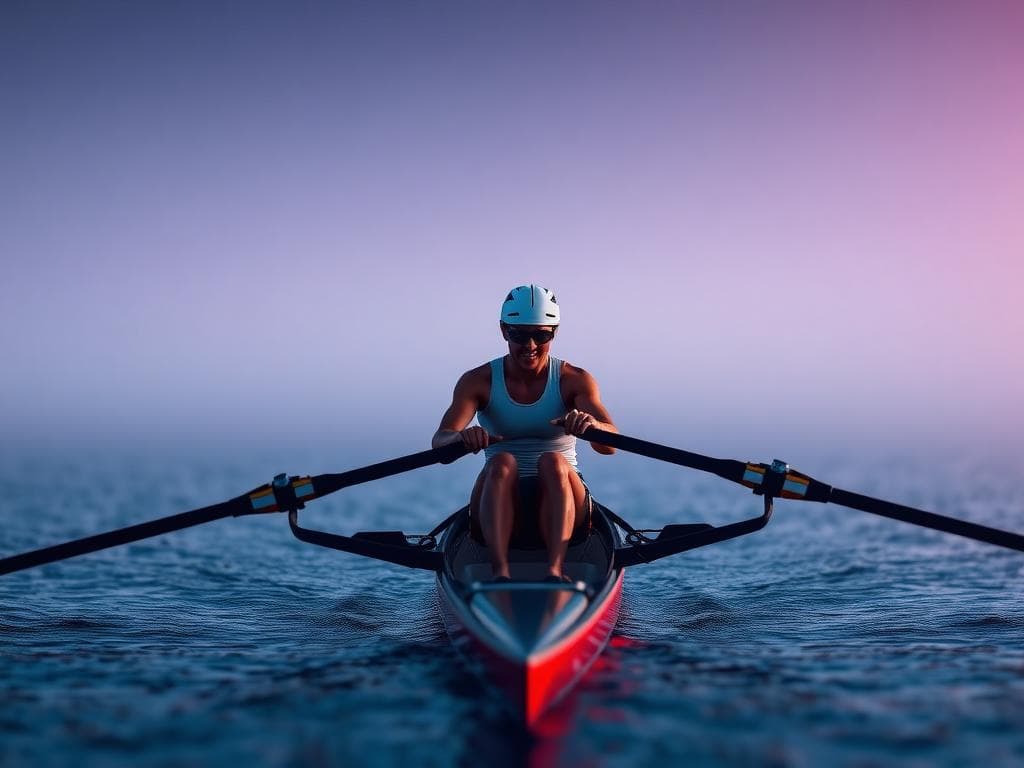
US Rower Smashes Pacific Solo Record in 44 Days
A Record-Breaking Arrival in Honolulu
On the night of July 3, 2026, a 21-foot rowboat named Lily glided into a Honolulu harbor, greeted by hundreds of cheering supporters. At the oars was Kelsey Pfendler, a 32-year-old Grand Canyon river-rafting guide, who had just completed a solo row from Monterey, California, to Oahu, Hawaii. The journey, spanning over 2,400 miles (3,900 km), took her just under 44 days—shattering both the previous women's record of 86 days and the men's record of 52 days.
Pfendler's achievement is historic on multiple fronts. She is the first American woman to solo row across the mid-Pacific, the youngest woman to do so, and now the fastest person—male or female—to complete the route. According to the Ocean Rowing Society International, which adjudicates records for Guinness World Records, her time of 43 days places her over 525 miles ahead of the men's record pace and more than 1,000 miles ahead of the previous women's record.
The Journey: 44 Days of Solitude and Struggle
Pfendler launched from Monterey, California, on May 21, 2026, in her 21-foot rowboat, Lily. For nearly a month and a half, she was alone on the vast Pacific, documenting her experience for hundreds of thousands of social media followers. Her video diaries offered an unfiltered look at the physical and mental toll of the journey.
She detailed blistered hands, the constant struggle to sleep amid stiff winds, and the mental grind of coping with unfavorable currents and wind patterns. She explained the logistics of survival: how she cooked, protected her skin from the sun, washed her clothes, and made fresh water from the ocean. In one video, her voice cracked with emotion; in another, she joked about her forehead hat tan line and the importance of caffeine pills.
From Grand Canyon Guide to Ocean Record Holder
Pfendler, 32, is a professional rafting guide who has spent the last eight years leading trips along the Colorado River in the Grand Canyon. Her background in navigating challenging river conditions translated surprisingly well to the open ocean. “I just love boats in the middle of nowhere,” she said in one of her video diaries, capturing the spirit of a woman who thrives on isolation and physical challenge.
Her journey was not just a physical test but a logistical one. On her 21-foot rowboat, Lily, she had to manage everything: cooking, desalinating water, protecting her skin from the relentless sun, and washing her clothes in saltwater. She relied on caffeine pills to stay alert and documented the highs and lows with raw honesty, from blistered hands to the surreal beauty of the night sky.
Social Media and the Power of Storytelling
Pfendler's journey was followed by hundreds of thousands on social media, where she posted video diaries from the middle of the Pacific. Her candid updates—showing her forehead hat tan line, her emotional breakdowns, and her quiet moments of triumph—turned her into a digital phenomenon. “If any part of this made at least one person feel a little bit more powerful in their own skin, I couldn’t ask for anything else,” she said in a video as she neared Oahu.
Her story resonates beyond the record books. It is a testament to the power of endurance, planning, and the human spirit. Pfendler's journey also highlights a growing trend: extreme athletes using social media to build communities and inspire action. Her message to followers was clear: “Think about trying to find your own big, hard, scary thing. You might not think that you are strong enough to finish it right now, but you’re definitely strong enough to start it.”
Technical and Logistical Feats
The row itself was a masterclass in self-sufficiency. Pfendler's 21-foot boat, Lily, was equipped with a watermaker, solar panels for charging electronics, and storage for freeze-dried meals. She faced stiff winds, unfavorable currents, and the constant threat of equipment failure. Her video diaries explained how she navigated using a GPS and a paper chart, relying on caffeine pills to stay alert during long night watches.
One of the most critical challenges was sleep. With no autopilot on a rowboat, Pfendler had to set alarms every 10 minutes during her rest periods to check for ships and changing weather. This fragmented sleep pattern, combined with the physical exertion of rowing up to 12 hours a day, pushed her to the edge of exhaustion. Yet she maintained a disciplined routine, documenting her progress and sharing it with a global audience.
Inspiration and Legacy
Pfendler's accomplishment has already inspired a new wave of interest in ocean rowing. In an interview with ABC's Good Morning America on July 6, she reflected on the surreal moment of reaching shore. “It was hard to soak in that I had actually made it,” she said. She expressed hope that her journey would encourage other women to take risks and push their limits. “It’s really motivating to think that maybe one day, I will get to see another woman work even harder to do what I did,” she added.
Her arrival coincided with another ambitious Pacific feat: marathon swimmer Catherine Breed began a 900-mile swim down the California coast on July 1, aiming to become the first person to swim the state's entire coastline. Together, these stories underscore a renaissance in human-powered ocean travel, driven by a new generation of athletes who combine physical grit with digital savvy.
What Comes Next
Pfendler's record is pending official certification from Guinness World Records, but the data from the Ocean Rowing Society International already confirms her place in history. For now, she is enjoying solid ground, reflecting on a journey that tested every fiber of her being. “It was very surreal,” she told ABC. “It was hard to soak in that I had actually made it.”
Her story is a powerful reminder that the biggest barriers are often the ones we set for ourselves. Pfendler didn't just break records; she redefined what is possible for a solo rower, proving that with enough grit, preparation, and a little bit of humor, even the vast Pacific can be conquered.
Related News
![Report: GPT-5.6 Sol Ultra produces proof of the Cycle Double Cover Conjecture [pdf]](/_next/image?url=https%3A%2F%2Fynrsbzrlauvaukksjyqr.supabase.co%2Fstorage%2Fv1%2Fobject%2Fpublic%2Fpost-images%2Fgenerated-1783789429468-fu7qs.jpg&w=3840&q=75)
Report: GPT-5.6 Sol Ultra produces proof of the Cycle Double Cover Conjecture [pdf]

Apple Sues OpenAI, Accuses Ex-Employees of Stealing Trade Secrets

OpenAI Launches GPT-5.6: Sol, Terra, and Luna Models Now Available

GitLost: How a Prompt Injection Leaked GitHub Private Repos

Report: Chat Control 1.0 and 2.0 Explained