AI Singer 'Eddie Dalton' Dominates iTunes Charts, Sparking Industry Debate
The AI Chart Invasion
In a startling development for the music industry, a fictional AI-generated artist named Eddie Dalton has successfully stormed the iTunes charts. As of early April 2026, Dalton occupies eleven positions on the iTunes Top 100 singles chart, with his debut album, 'The Years Between,' peaking at number three.
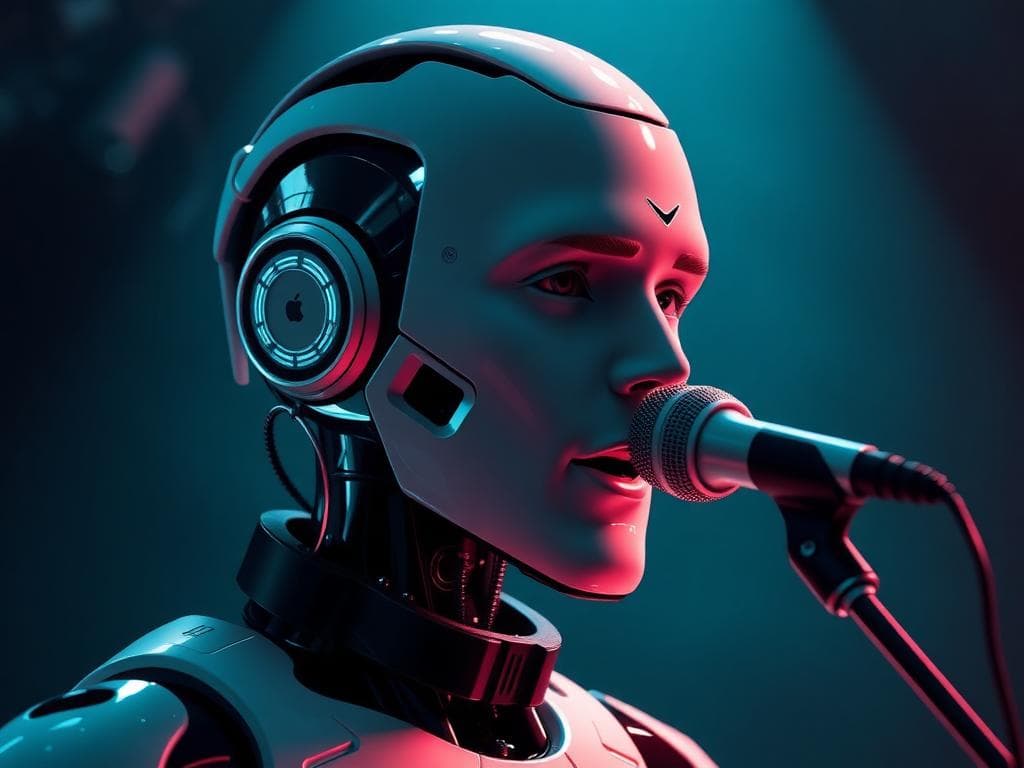
This is not a marketing stunt by a major label but the work of a single content creator, Dallas Little, who operates under the banner of Crunchy Records. Little has engineered Dalton's entire persona—from his sound, described as a mix of Otis Redding and B.B. King, to his gray-haired, soulful crooner appearance in AI-generated artwork.
The songs, including the track 'Another Day Old' which has garnered over 1.2 million views on YouTube, are created entirely through AI processes. Little writes the songs and then uses AI tools to generate the vocal performance and accompanying videos, effectively removing traditional recording and musical production from the equation.
Dissecting the Phenomenon
The rapid chart success of a completely synthetic artist raises immediate questions about the mechanisms behind it. According to sales data from Luminate cited in reports, the 'Eddie Dalton' project has sold approximately 6,900 tracks since its inception.
This figure appears incongruously low for an act commanding such significant chart real estate. The disparity suggests a potential exploitation of iTunes' chart algorithms, possibly through targeted digital sales campaigns rather than organic, widespread listener adoption.
Notably, the project lacks traditional industry support: there is no radio airplay and minimal streaming presence. This points to a focused, perhaps niche, strategy that effectively 'games' the system to achieve visibility, a tactic that would be far more costly and complex for a human artist.
Industry Implications and Ethical Quandaries
The rise of Eddie Dalton arrives amid a heated, ongoing debate about AI's role in creative industries. Prominent artists like Sir Elton John and Dua Lipa have publicly called for stricter regulations on using copyrighted material to train AI systems.
Dalton's success forces a direct confrontation with several core questions. Should AI-generated artists be allowed to compete on the same charts as human musicians? Does their presence devalue the years of training and emotional investment of traditional artists?
As one observer on social media platform X noted, if listeners cannot distinguish between AI and human artistry, does the origin even matter? This philosophical question strikes at the heart of artistic value and authenticity in the digital age.
A Disruptive Precedent
The event is not isolated. It follows other instances of AI influencing music charts and consumption, signaling a trend rather than an anomaly. The scalability of AI music production is its most disruptive feature.
As Dallas Little demonstrated, a single individual can now produce a high volume of 'marketable' music at near-zero marginal cost after the initial AI model development. This challenges the entire economic model of the music industry, from studio costs to artist development.
The potential for an endless stream of AI-generated content to flood marketplaces and recommendation algorithms poses a significant threat to the discoverability of human artists. It also raises concerns about listener deception and the need for clear labeling of AI-generated content.
The Future of Music Creation
The Eddie Dalton case study presents a critical inflection point. It proves that AI can now produce music that resonates with a paying audience enough to achieve commercial recognition, at least within specific digital storefront parameters.
This will likely accelerate several developments: increased pressure on platforms to revise chart eligibility rules, a push for legislative action regarding AI and copyright, and a potential bifurcation in the market between 'human-certified' and AI-assisted music.
While some may dismiss Dalton as a novelty or a loophole exploit, the underlying technology is only improving. The debate it has ignited is just beginning, and the music industry must now grapple with defining the line between tool and replacement in the age of artificial creativity.
Related News

Gemma 4 E2B Powers Real-Time, On-Device AI Chat in Parlor Project
GuppyLM: A Tiny LLM Project Demystifies AI Model Training
AI Coding Agents Empower Developers to Build Complex Tools Faster

BrowserStack Accused of Leaking User Emails to Sales Intelligence Platform
Anthropic Discovers 'Functional Emotions' in Claude AI, Impacting Behavior