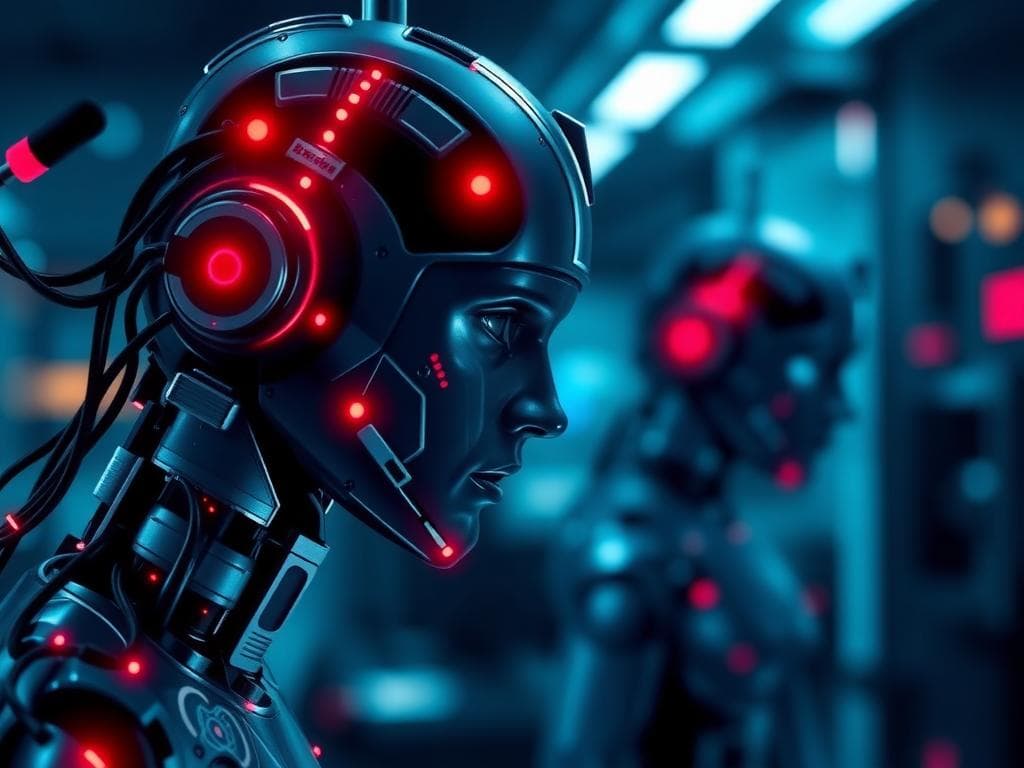
AI Psychosis: Tech Leaders Warn of Systemic Risks in Corporate AI Adoption
The Warning: "AI Psychosis" Grips Corporate Strategy
Mitchell Hashimoto, creator of Terraform and co-founder of HashiCorp, has issued a stark warning to the tech industry. In a May 2026 post, he stated, "I strongly believe there are entire companies right now under heavy AI psychosis." He describes this state as one where rational conversation about the risks is impossible, and companies operate under a dangerous mantra.
Hashimoto draws a direct parallel to the infrastructure automation debates of the cloud era, specifically the tension between Mean Time Between Failures (MTBF) and Mean Time To Recovery (MTTR). He warns that a reckless "MTTR is all you need" mentality has resurfaced. The logic is: "It's fine to ship bugs because the agents will fix them so quickly and at a scale humans can't do!"
He argues this mindset ignores a hard-learned lesson: you cannot sacrifice resilience for speed. "We learned in infrastructure that MTTR is great but you can't yeet resilient systems entirely," he notes. Hashimoto expresses personal concern, as these beliefs are held by respected friends, making candid discussion difficult.
The Symptom: Uncontrolled Agent Proliferation
Evidence of this aggressive, potentially ungoverned adoption is mounting. According to a Wall Street Journal report from May 2026, companies are facing a new problem: too many AI agents. Mike Trkay, CIO of Fair Isaac (FICO), revealed its 3,500 employees are creating "dozens of new AI agents daily."
This sprawl creates significant cybersecurity and management headaches. Jai Das of Sapphire Ventures notes agents can run anywhere—on laptops, servers, or other systems—making them hard for IT to track. Gartner predicts that within two years, the average Fortune 500 enterprise will run over 150,000 AI agents, yet only 13% of organizations believe they have adequate governance in place.
Companies like Lyft, DaVita, and GitLab are now trying to manage this proliferation without stifling innovation. The agents are evolving from simple code-writing and email-summarizing tools to complex systems performing "deep research" and automating entire business workflows.
The Human Cost: Burnout and "Rotting" Skills
The push for AI adoption is having a profound human impact inside tech companies. At Meta, as reported by Futurism and corroborated by other sources, the drive is intense. Employees are pressured to run "a whole posse of AI agents" to tackle multiple projects simultaneously.
Meta has implemented tracking dashboards, and employees who don't use AI enough risk poor performance reviews. This has led to an environment where, as one employee told the New York Times, "It's incredibly demoralizing." The internal culture shift has spurred some to seek employment elsewhere, or even try to get fired for severance.
Software developers report a deeper, more insidious effect. In anonymous interviews with 404 Media, developers say AI is "rotting their brains." One UX designer at a midsized tech company warned, "We're building a rat's nest of tech debt that will be impossible to untangle."
They describe a reality where the appearance of participation with AI matters more than output quality. "The actual quality of output doesn't matter as much as our willingness to participate," one developer stated. This environment prioritizes speed and volume of code generation over security, maintainability, and semantic understanding.
The Technical Debt and Systemic Risk
Hashimoto's warning centers on this exact point: the creation of fragile, incomprehensible systems. "Systems can appear healthy by local metrics while globally becoming incomprehensible," he writes. Bug reports may decline, but latent risk can explode. Test coverage can rise while genuine understanding of the codebase falls.
He fears a repeat of past automation catastrophes: "you can automate yourself into a very resilient catastrophe machine." When changes happen at AI-driven speeds, underlying architecture can decay unnoticed until a major failure occurs. This risk is compounded by the sheer scale of agent-driven changes happening across large organizations.
The security implications are severe and direct. As detailed by The Hacker News, AI hallucinations—confidently stated falsehoods—pose a real and growing security risk. When AI outputs sound authoritative, employees may act without verification, especially if they are pressured to adopt AI tools.
Mitigation Strategies and Governance Gaps
Security experts recommend specific controls to mitigate hallucination risks, which also address broader "psychosis" concerns. Key measures include mandating human review before any AI output triggers a sensitive action, especially for infrastructure or access changes.
Other critical steps are treating training data as a security asset, enforcing least-privilege access for AI systems (so they cannot execute dangerous hallucinated commands), and investing in prompt engineering training. However, these require deliberate governance, which the Gartner statistic suggests is largely absent.
The fundamental challenge, as Hashimoto identifies, is cultural. The current fervor makes it difficult to implement these sane safeguards. Dismissive responses like "it has full test coverage" or "bug reports are going down" shut down necessary conversations about systemic resilience.
Why This Matters: A Reckoning on the Horizon
The confluence of these reports paints a concerning picture. Corporate leadership, eager to demonstrate AI transformation and justify efficiency-driven layoffs (as seen at Meta, Microsoft, and Snapchat), is pushing for breakneck adoption. This creates a perfect storm: uncontrolled agent sprawl, eroding developer skills, mounting technical debt, and increased security vulnerabilities.
The promise of AI-driven efficiency is being used to justify headcount reductions before the long-term stability of these AI-augmented systems is proven. The industry appears to be forgetting the painful lessons of previous technological shifts, risking a large-scale systemic failure.
Hashimoto's warning is not against AI itself, but against the unquestioning, manic adoption that disregards foundational engineering principles. As the agent count climbs into the hundreds of thousands per enterprise, the industry may be building a house of cards, one confident but hallucinated line of code at a time.
Related News

Bun Rust Rewrite: Miri Uncovers Unsound Unsafe Code, Sparks Security Debate
OpenAI Integrates Codex AI Agent into ChatGPT Mobile App

MacBook Air M4 RTX 5090 eGPU: Gaming & AI Benchmarked
US AI Lead Defined by Commercialization, Cloud Dominance, Not Just Models

How to Claim a Free .US Locality Domain in 2025: A Complete Guide