1-Bit Pixel Art Recreation of Hokusai's Great Wave Bridges Nostalgic Tech and Art
A Nostalgic Pixel-Art Endeavor
A personal creative project from May 2023 saw an artist undertaking a meticulous digital homage to one of art history's most iconic images. The goal was ambitious: to recreate Katsushika Hokusai's entire 'Thirty-six Views of Mount Fuji' series as 1-bit pixel art. This endeavor, though currently stalled, began five years prior and is driven by a deep appreciation for both the original Japanese woodcut prints and the early aesthetic of Macintosh computing.
The artist cites the pursuit of a creative 'flow state' and a love for using old Macintosh computers as the core motivations. The project is a tangible intersection of art history and digital nostalgia, seeking to capture Hokusai's vision through the constrained, grid-based lens of 1980s personal computing.
The Technical and Aesthetic Constraints
Authenticity is a key pillar of the project. Each recreation is painstakingly crafted to match the original Macintosh screen resolution of 512 by 342 pixels. This self-imposed limitation is described as feeling 'right,' a deliberate choice to root the work in the authentic hardware experience of the era, despite the admitted challenge it presents.
The workflow relies on period-appropriate hardware and software. The artist typically uses a Quadra 700 or PowerBook 100 running System 7, chosen for reliability and familiarity. The software of choice is Aldus SuperPaint 3.0, a program from the artist's childhood, underscoring the project's 99% nostalgia-driven nature.
The aesthetic target is not just Hokusai, but also the pioneering work of Susan Kare, the graphic designer who defined the early Macintosh visual language. The artist explicitly references Kare's 'Japanese lady' icon from the MacPaint box, drawing a direct lineage between that foundational pixel art and this contemporary homage.
The First Published Piece: The Great Wave
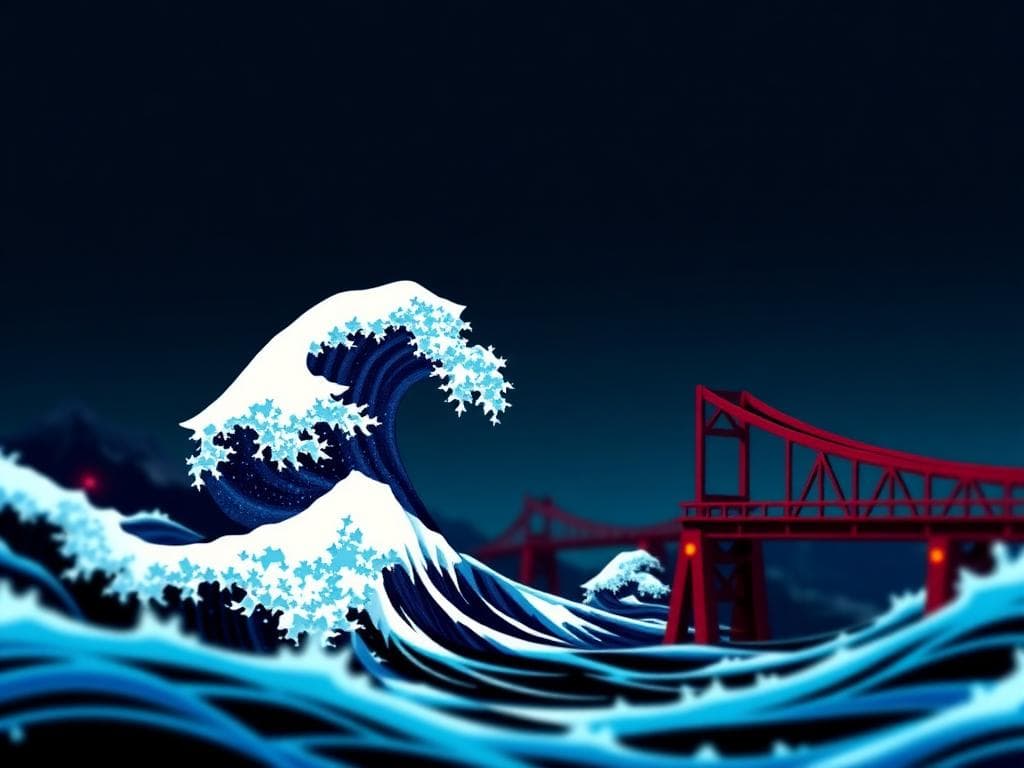
While the first piece tackled in the series was not 'The Great Wave off Kanagawa,' it is the first to be publicly shared, prompted by encouragement from the online community. The final 1-bit rendering faithfully reduces the famous seascape to a stark black-and-white bitmap, where every pixel's placement is critical to suggesting the foam, the boats, and the looming form of Mount Fuji.
The completed work is shared under a Creative Commons Attribution-NonCommercial-NoDerivatives 4.0 license, with a request for proper credit. As a bonus, the artist provides downloadable desktop pattern files (PNG and PICT formats) scaled for Macintosh screens with a 640x480 resolution.
Context in a Broader Tech and Art Landscape
This project exists within a wider cultural moment where technology intersects with artistic reinterpretation. Source 2's review of Chang-Ching and Rhett Tsai's work at Watershed Art & Ecology highlights how contemporary artists draw inspiration from traditional practices, like Chinese fishing villages, to comment on ecology—a different but parallel form of historical engagement.
Meanwhile, the tech industry grapples with the resource implications of new creative tools. Source 3 notes that 'AI galaxy hunters' are contributing to the global GPU crunch, highlighting the computational cost of modern digital art and science. In contrast, the 1-bit Hokusai project is a study in extreme computational minimalism, using decades-old hardware.
The rise of AI in content creation, as seen in Source 4's report on an AI-generated Bitcoin thriller film, presents another foil. While that industry markets the novelty and cost-cutting potential of AI, this pixel art project is a deliberate, hand-crafted process celebrating specific historical tools and human artistic translation.
Finally, cutting-edge material science, such as the 'printable meta-assemblies' for synergetic coloration discussed in Source 5's Nature article, represents the frontier of color and light manipulation. The 1-bit project sits at the opposite extreme, embracing a complete absence of color and grayscale to find expression in pure form and contrast.
Why This Meticulous Recreation Matters
This project is more than a technical exercise or a personal hobby. It acts as a bridge between distinct eras of visual culture. It demonstrates how artistic constraints—whether a woodcut block, a 1-bit pixel grid, or a 512x342 canvas—can foster creativity rather than hinder it.
In an age of infinite digital color and AI-assisted generation, the work serves as a reminder of the foundational aesthetics of personal computing. It connects the dots from Hokusai's mass-produced woodcuts, through Susan Kare's interface icons, to a modern enthusiast keeping a very specific digital craft alive. It's a preservation effort, not of data, but of a particular creative sensibility and workflow.
The stalled state of the full 36-views project is itself a telling detail. It reflects the immense, long-term dedication required for such manual digital craftsmanship, standing in stark contrast to the rapid, automated production touted in other tech-art spheres. Its value lies in the intent, the process, and the connection it forges between the artist, the tools, and art history.
Related News
Anthropic Publishes Claude System Prompts, Redefining AI Transparency
Google Commits Up to $40B in Anthropic, Intensifying AI Arms Race

US Special Forces Soldier Charged in Insider Trading on Prediction Market
OpenAI Unveils GPT-5.5: A Smarter, More Efficient AI for Real Work
Qwen3.6-27B: Dense Model Achieves Flagship Coding, Surpasses Giant MoE Predecessor